Much of the talk in the coffee shops in the central Corn Belt is about the expected big acreage shift from soybeans to corn. What most people are talking about is that their neighbors are going to make the shift — not that they themselves are doing anything different.
History is a strong indicator that acreage shifts from one crop to another are always minor unless propelled by a government program change, such as the PIK program back in the 1980s.
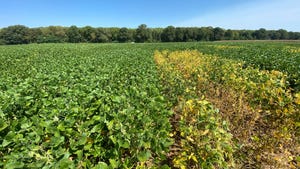
The big reason for the anticipated acreage shift from soybeans to corn is the threat of Asian soybean rust.
My guess is that by the end of February, unless a major outbreak of soybean rust has occurred in Brazil, the concern will lessen in the U.S. The tables below give a snapshot view of what we think is going to happen. My educated guess is that we could see a 1.5-million-acre shift from soybeans to corn.
Adding or subtracting a million acres isn't going to make much difference with the large supplies of both soybeans and corn. Something drastic needs to happen on the yield side, not just acreage shifts, in order to reduce supplies.
ECONOMICS FAVOR CORN
If you're a central Illinois corn/soybean producer, you don't even need a calculator to show that corn is favored over soybeans from a gross dollar perspective.
However, that same economic argument has existed for the last two or three years with little or no acreage shift. Producers still prefer crop rotations, which result in only minor acreage shifts. Then add in the increased acres in the Dakotas and I think you can rule out some rumors of 5 million plus acres shifting from soybeans to corn.
As you can see by my estimates for the 2005-06 crop, it's hard to argue a bullish scenario for either corn or soybeans this year.
The long-term fundamentals in corn are positive, but are severely overshadowed by large supplies this year. Odds are favorable that carryover supplies in corn will decline this year, but not enough to help at current price levels.
A 1.8 billion bushel carryout is one huge pile of corn. When you consider that many of your neighbors have already collected their LDPs and are hoping this market is going higher, the psychology is all wrong for a major bull market.
This is the year after a bull market and history would strongly indicate that there will be only minor price rallies.
Corn and soybeans are both in the middle of long-term bear markets, and while there will be some weather scares, unless soybean rust wipes out a significant part of the South American or the U.S. crop, this market is going to the lowest levels of the last five years.
How low? It really doesn't make any difference. When the trend is down make sure everything is sold. $1.50 cash corn and $4.50 cash beans are certainly reasonable possibilities within the next couple of months.
Richard A. Brock is president of Brock Associates, a farm market advisory firm, and publisher of The Brock Report. For a trial subscription and information on Brock services, call 800-558-3431 or visit www.brockreport.com.
SOYBEAN SUPPLY AND DEMAND
| USDA | BROCK EST. | ||||
|---|---|---|---|---|---|
| '01-'02 | '02-'03 | '03-'04 | '04-'05 (Est.) | '05-'06 | |
| SUPPLY | |||||
| Stocks | 248 | 208 | 178 | 112 | 435 |
| Production | 2,891 | 2,756 | 2,454 | 3,141 | 3,058 |
| TOTAL | 3,141 | 2,969 | 2,638 | 3,258 | 3,500 |
| USAGE | |||||
| Crush | 1,700 | 1,615 | 1,530 | 1,660 | 1,680 |
| Exports | 1,064 | 1,044 | 885 | 1,010 | 1,000 |
| Seed/Residual | 169 | 130 | 111 | 153 | 153 |
| TOTAL | 2,933 | 2,791 | 2,526 | 2,823 | 2,833 |
| Ending Stocks* | 208 | 178 | 112 | 435 | 667 |
| Average Price | $4.38 | $5.53 | $7.34 | $4.75-5.45 | $4.25-4.60 |
| ACREAGE (Millions) | |||||
| Planted | 74.1 | 74.0 | 73.4 | 75.2 | 74.0 |
| Harvested | 73.0 | 72.5 | 72.5 | 74.0 | 72.8 |
| Yield-Bu/Acre | 39.6 | 38.0 | 33.9 | 42.5 | 42.0 |
| Stocks/Usage/Ratio | 7.1% | 6.4% | 4.4% | 15.4% | 23.5% |
| Year begins September 1. * Loans and free stocks. In million bushels. | |||||
| SOURCES: USDA, BROCK ASSOCIATES | |||||
BROCK CORN SUPPLY AND DEMAND
| USDA | BROCK EST. | ||||
|---|---|---|---|---|---|
| '01-'02 | '02-'03 | '03-'04 | '04-'05 (Est.) | '05-'06 | |
| SUPPLY | |||||
| Stocks | 1,899 | 1,596 | 1,087 | 958 | 1,960 |
| Production | 9,507 | 8,967 | 10,114 | 11,807 | 10,919 |
| Imports | 10 | 14 | 13 | 15 | 15 |
| TOTAL | 11,416 | 10,578 | 11,214 | 12,780 | 12,894 |
| USAGE | |||||
| Food/Seed (Ink, Food) | 2,406 | 2,340 | 2,577 | 2,795 | 2,980 |
| Alcohol (Ethanol Fuel) | 706 | 996 | 1,204 | 1,425 | 1,580 |
| Feed/Residual | 5,868 | 5,563 | 5,781 | 6,075 | 6,110 |
| Exports | 1,905 | 1,588 | 1,897 | 1950 | 2,050 |
| TOTAL | 9,820 | 9,491 | 10,257 | 10,820 | 11,140 |
| Ending Stocks | 1,596 | 1,087 | 958 | 1,960 | 1,754 |
| Stocks* | 1,590 | 1,083 | 958 | 1,959 | 1,753 |
| CCC Stocks | 6 | 4 | 0 | 1 | 1 |
| Average Price | $1.97 | $2.32 | $2.42 | $1.80-2.10 | $1.80-2.25 |
| ACREAGE (Millions) | |||||
| Planted | 75.8 | 78.9 | 78.7 | 80.9 | 82.7 |
| Harvested | 68.8 | 69.3 | 71.1 | 73.6 | 75.3 |
| Yield-Bu/Acre | 138.2 | 129.3 | 142.2 | 160.4 | 145.0 |
| Stocks/Usage Ratio | 16.2% | 11.4% | 9.3% | 18.1% | 15.7% |
| Year begins September 1. * Loans and free stocks. In million bushels. | |||||
| SOURCES: USDA, BROCK ASSOCIATES | |||||