Landscape Restoration Builds Soil Quality, Bottom Line

Clay Mitchell uses "surplus"-topsoil to take soil and move it to eroded areas.

Grass helps protect this western Iowa cropland with practices including contour buffer strips, field borders, grassed waterways, and grass on terraces. Clay Mitchell uses these "surplus"-topsoil areas to take soil and move it to eroded field areas.

Photo: NRCS


Clay Mitchell, Buckingham, Iowa, farmer and biomedical engineer spoke about using technology on the farm at the Advanced Agronomy Conference in Edmonton, Alberta, Canada, on Nov. 19. Mitchell moved valuable topsoil from grass waterways, where silt accumulated, to areas lacking in topsoil. With a goal of 8 in. topsoil depth across most areas, he scraped topsoil from “surplus”-topsoil areas (such as along grass waterways).

Thanks to telemetry (real-time data gathering), each pass across a field contributes more data to a field’s elevation map. “It’s also good for identifying areas with erosion,” he says.

By moving valuable topsoil from surplus areas to eroded areas in need of topsoil, Mitchell calculates he added $6,000/acre to his land value at a cost of $810/acre (labor and machinery), based on three years’ data from doing so on his home farm.

Automation allows him to automate the moving of this valuable accumulated soil to areas that really need it to be productive. “We can do in one day what would take a crew of 12 to do without telemetry,” Mitchell says. With 1 acre-in. soil weighing 165 tons, multiple machines with automated mapping speed things considerably.

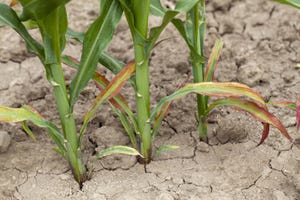
“In terms of opportunities, a drought year is when soil productivity is most differentiated.  In fact, the hybrid-maize yield model from the University of Nebraska predicts such a decreasing impact of soil on plant yield during good weather that soil type actually becomes a non-factor under optimal moisture.  The sandy soils where crops die off the fastest this year are also the soils with a low ability to hold nutrients, resist erosion and support a healthy soil ecosystem.  Yield maps this year will provide a very special data layer for future understanding of our soils,” Mitchell says.

Discuss this Article 3

Gene (not verified)
on Nov 21, 2012

Very interesting article but I would like more info on machinery used & how work was done. Who may I contact as I may want to try this on my VA farm?

Gene

swinsor
on Nov 23, 2012

Thanks for the question! Clay Mitchell, Mitchell Farms, has a website, www.mitchellfarms.com, and lists his email address there as clay@mitchellfarm.com.
You may also want to read this related Corn & Soybean Digest article on a farmer and researchers who are pursuing this concept at http://bit.ly/Y9qAY9
Please let us know how you make out if you try it.

Bob (not verified)
on Jan 25, 2013

Gene
Hi We have been using the Trimble FMX field level and some software out of Australia for doing 3D designs like this for a number of years now. The software is called Optisurface and I think it is the best thing available right now. you can find it on google.

Post new comment
Sign In or register to use your Corn and Soybean Digest ID
(optional)

Newsletter Signup

Continuing Education Courses
New Course

Accredited for 2 hours/CCA Soil & Water credits. The 2,000 member...

This online CE course details sound mechanical irrigation design and management practices to...
Keeping crop protection chemicals on the crop for which they are intended has been a...
Connect With Us