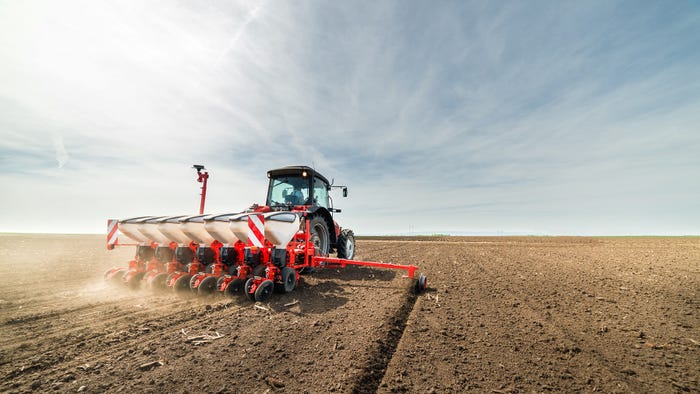
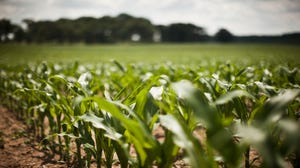
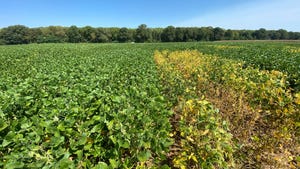
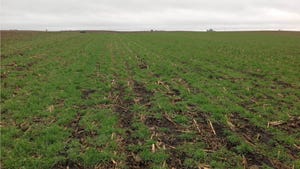
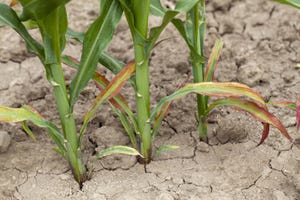
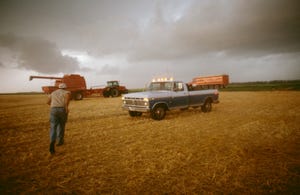
Bob Recker, Cedar Valley Innovations, LLC, went up in a plane and took these photos around northeast Iowa on July 12. To say they patterns, droughty spots and overall views of the crops are interesting is an understatement. Take a look and let us know if you have any questions or comments regarding what you see when it comes to the patchy spots and veiny-looking crops. Is it old tile that's turned into underground irrigation rather than drainage? Underground passages redistributing water? Or is it just soil differences? Alien landing pads, perhaps? Let us know what you think is causing these strange patterns! Leave a comment to let us know your theory!
Discuss this Gallery 5
Tile lines are pretty obvious, which is why we need to get into water management and not drainage. The others are probably harvest traffic that hasn't been worked out of the soil. Would have liked to see that terraced corn field in the edge of the first slide. Bet that looked better than it's neighbor.
This is a good example of poor farming practices and should be used at the local FSA office to show what happens with poor practices. You can see where a terrace was removed, you can see where the rich prairie soils have eroded down to the lower ground and left no black soil on the hill tops. These are very fragile wind blown soil deposits, and if not covered or use of cover crops will erode. These soils have been use for 50 or 100 years now, and almost depleted already. The tile stripes are due to the hard pan being broken and the plant then sends its roots to a deeper more wet area. But breaking this hard pan in the whole field is not the answer, residue and a cover crop is the only hope. If you are fimilar with the Shanandoah Valley of the East, this is what will happen to NE Iowa if good practices are not followed. The Shanandoah Valley is a dead sea of farm ground, all eroded to the local valleys, history will repeat itself if FSA does not educate. Ron.
it's only a difference in the soil... check out pic no 7. you see the river winding..i have the same situation on my farm. winding rivers change place with time. the spots are actually sandier soil left by the river long time ago. sandier soil = less water holding capacity, so these areas are the first ones to show deficiencies
We farm in SW Manitoba just west of the Turtle Mts. In drought years we will have similar patches show up . What ours are is patches of sand and or gravel which drain the moisture very quickly. and leave dead patches. The other thing is soluable salt patches [alkali] which the roots go down into in very dry years. The salts quickly plug the root pores and the plant dies. That is what would happen on our farm in a terrible drought as those farmers have experienced
This is a good example of poor farming practices and should be used at the local FSA office to show what happens with poor practices. You can see where a terrace was removed, you can see where the rich prairie soils have eroded down to the lower ground and left no black soil on the hill tops. These are very fragile wind blown soil deposits, and if not covered or use of cover crops will erode. These soils have been use for 50 or 100 years now, and almost gio xach