Why Brazil is Losing Farmland

For a long time, I have read articles about Brazil’s capacity to expand its agricultural area. But most of these articles are by foreign writers, who are not aware of what is happening here or what our current administration’s policies are for farmland development.

Nowadays, to be a farmer in Brazil is almost considered a sin. We are labeled as destroyers of nature. Agribusiness is bad in Brazil. The media is totally against farmers, and the good guys are the ecologists. Just recently, after decades of talks in congress, politicians here approved a new forest code that dictates how we deal with environmental issues from now on. To get an idea what kind of disastrous regulations we’re talking about, farmers will have to abandon or reforest more than 75 million acres of farmland. These acres are being planted today. This is prime land, not waste land. Most of it is located in the river bottoms, and can no longer be used to produce a crop.

What is worse, farmers will have to pay for everything. We developed the land the way the law said we could in the past, and made it tillable and productive. Now they change the law and we have to pay for it.

You may think this is madness, in a world that needs more and more food, but the media and the city people (the greater number of voters) wanted even more conservation. They dream that we should go back to the way things were when the Portuguese discovered our country in 1500. For them, food grows every night on supermarket shelves. Areas that have been planted for centuries will have to be abandoned or reforested.

In my personal opinion, the famers’ lobby should give in to everything they want. Stop farming on every acre they want to be protected. That would last one or two years. When they have to pay double what they pay today for food, they would beg us to produce again. You can learn by love or by pain, and they are choosing pain.

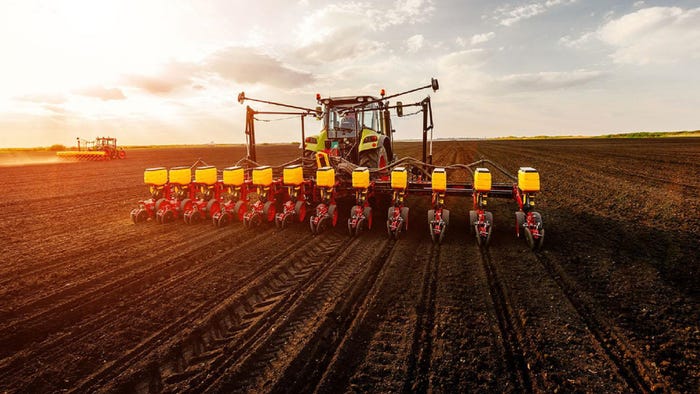
It is very, very difficult to expand farmland in frontier areas. To cut trees to plant a crop is almost forbidden. Brazil will increase its grain production, but just like in the past, most of it will come from increased productivity, and not from farming new areas. We have a lot of room to expand the productivity of our corn and wheat crops, but not soybeans. There, our national average matches the per-acre U.S. soybean average.

To get more grain from each acre will demand a kind of technology that most farmers here are afraid to invest in. This year, for example, we may produce more soybeans than the U.S., but this increase will come from areas that were planted with corn, cotton and pasture the previous years, not from new areas in the frontier.

Brazil has 60% of its territory covered with natural forests. And it’s likely we will have more than that in the future.

Discuss this Article 2

Lawrence (not verified)
on Dec 17, 2012

Personally, this a great initiative that needs to be implemented world wide. Crop productivity is very low I presume, and so that needs to be solidified by being more efficient with the farmland already available (not making new farms either). Agriculture accounts for 70% of water consumption globally. So now is the time to find sustainable methods with less to work with. It can be done. By the way, a good portion of farm grown products that end up on store shelves are thrown out eventually. That is also unsustainable.

MikeG50
on Dec 20, 2012

Lawrence, your presumption is badly mistaken. There are many areas of the world where crop productivity is low, but not in Brazil or the U.S., nor most of the other major agricultural areas of the world. The statistic that agriculture accounts for 70% of water consumption is meaningless. Virtually all of that water is water that falls from the sky and nearly all is returned in the plant evapo-transpiration. Irrigation is minor, percentage-wise, around the world , and once again, the water is returned to the atmosphere (from where it falls again). As far as food waste goes, certainly that is an area in which we can all work to improve, but it is unlikely to ever be decreased in any meaningful way. There already exists tremendous incentives to not waste food - hunger and cost. Very few in the world can resist those incentiv

Post new comment
Sign In or register to use your Corn and Soybean Digest ID
(optional)

Newsletter Signup

Continuing Education Courses
New Course

Accredited for 2 hours/CCA Soil & Water credits. The 2,000 member...

This online CE course details sound mechanical irrigation design and management practices to...
Keeping crop protection chemicals on the crop for which they are intended has been a...
Connect With Us