Share

Historical Harvest Delays

Nov 3, 2009 3:50 PM, By Kent Thiesse

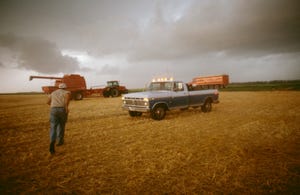
Based on the USDA weekly Crop Progress Report on Oct. 25, the corn and soybean harvest progress through October was on pace to be the slowest ever. The USDA report showed that only 44% of the soybeans were harvested nationwide, and a mere 20% of the corn was harvested, as of Oct. 25. The previous low harvest progress on comparable dates in the USDA Reports was 46 % of the soybeans harvested on Oct. 28, 1984, and 31% of the corn harvested on Oct. 24, 1993. In 2008, the weekly USDA Crop Report on Oct. 26 reported 76% of the soybeans harvested and 39% of the corn harvested. The five-year average (2004-2008) for late October harvest progress in the U.S. is 80% for soybeans and 58% for corn.

As of Oct. 25, only 44% of the soybeans in Minnesota were harvested, compared to a five-year average of 93%. A mere 6% of the corn was harvested, compared to a five-year average of 48% harvested. Iowa was not fairing much better in the Oct. 25 USDA report, with only 47% of the soybeans and 12% of the corn harvested. Illinois had only 33% of the soybeans and 14% of the corn harvested as of Oct. 25. Harvest progress in the past week in the Upper Midwest has been very minimal in many areas due to moderate to heavy rainfall and very wet field conditions. Some harvest progress did occur where field conditions were fit, with some improved weather on Oct. 27 and 28 and again over Halloween weekend.

According to weather data at the University of Minnesota Southern Research and Outreach Center at Waseca, October 2009 will be the wettest on record with 6.24 in. of precipitation recorded as of Oct. 26, compared to a normal October precipitation of 2.5 in. The weather data at Waseca also showed that 2009 was the third coolest October on record through Oct. 26, with a 24-hour average temperature of 41.1° F in 2009, compared to long-term average October temperature of 47.7°. The combination of the continued cold and very wet weather conditions in the Upper Midwest has made October 2009 one of the worst October’s ever for harvest weather conditions.

Grain Quality Problems
In addition to the harvest delays, producers are dealing with numerous grain quality problems from excessive moisture contents, to low test weights, to incidences of mold and mycotoxins. The continued high grain moisture has been a major issue for soybean producers. Even when drier, warmer days have occurred in the past couple of weeks, the grain moisture of the soybeans has remained at 16-18% or higher.

Soybeans delivered to grain elevators are being heavily discounted at moisture contents above 13%, and many grain elevators will no longer accept soybeans above 15% moisture due to the large amount of high-moisture soybeans they have already accepted. This means that farm operators choosing to harvest soybeans above 15% moisture must use a grain dryer before delivering them to the grain elevator. Soybeans must also be dried to 12-13% moisture for safe storage in on-farm grain bins until next spring. Most farms do not have enough grain dryer capacity to dry soybeans, in addition to the very wet corn coming out of the field, and some producers do not have adequate bin space to store the soybeans.

Most corn coming out of the field in southern Minnesota is still at 26-30% moisture or higher. Moisture contents have dropped very little during the last half of October, and are likely to drop very slowly in the coming weeks. Research shows that corn moisture only drops about 0.25%/day with average weather conditions in November, and maybe as much as 0.50% with ideal conditions; of course it doesn’t drop at all with poor conditions. Corn drying costs in 2009 are running three to four times higher than in recent years, and compared to what farm operators budgeted for in 2009.

University research shows that corn drying costs at 3.5¢/bu. are 50-60¢/bu. for corn at 30% moisture, compared to drying costs of 15-20¢/bu. for corn coming out of the field at 20% moisture. In addition, the moisture shrink reduction for corn harvested at 30% moisture is four to five times higher, as compared to corn harvested at 20% moisture.

Get Copyright ClearanceWant to use this article? Click here for options!
© 2010 Penton Media, Inc.


Acceptable Use Policy blog comments powered by Disqus

Most Recent Story

Weather

Continuing Education

Click here to view more courses


Accredited for 2 Units CCA Soil/Water Management:

(New Course)
Agronomic Principles and Efficient Chemigation and Fertigation Using Center Pivot/Linear Sprinkler Systems

This online CE course details sound mechanical irrigation design and management practices to allow efficient chemigation and fertigation.

Back to Top

Browse Back Issues

Related Sites