Crop Sensors Come of Age | Farmers Prove Technology Can Deliver Comfort, Payback

Think Different

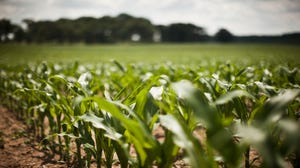
Implementing optical sensing requires growers to think differently about the application process,as well as potential benefits. Minnesota farmer Robert Goettl emphasizes not simply relying on the technology. “Every year the vegetation is different, and even different varieties can have different color changes,” he says. “You need to think about what the corn looks like before you even start. You also have to match the soil type.

“If the corn is really dark, you may think you have plenty of N, but the variability will still be there,” he says. “If you set parameters and the system doesn’t want to apply any N, you need to adjust it by altering growing degree days, N use efficiency or NDVI (Normalized Difference Vegetation Index) on the controls.”

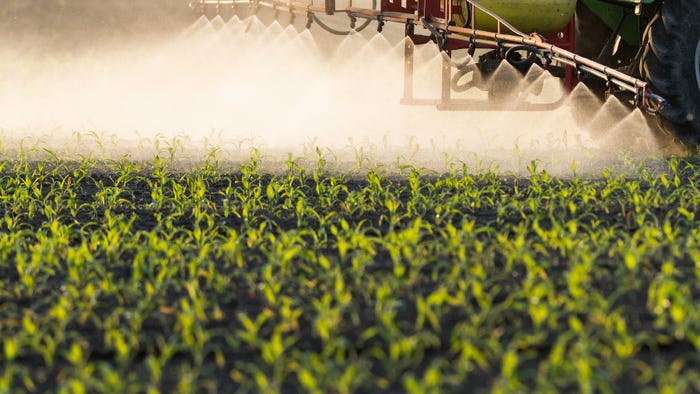
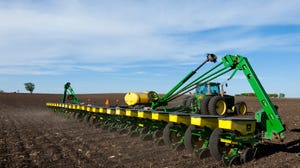
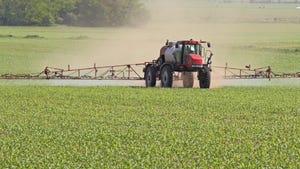
Applicator equipped GreenSeeker optical sensors use N-rich strips to variable-rate apply liquid N in-season. Robert, Jerome and Justin Goettl rely on a coulter-cart system similar to this one to boost yields with fewer gallons of liquid N.

Photo: Trimble

Technical know-how needed

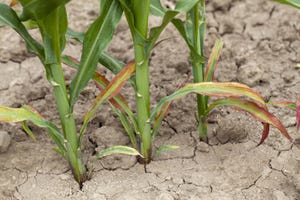
John Sawyer, Extension fertility specialist, Iowa State University, and Ken Sudduth, agricultural engineer, USDA ARS, are two researchers who have worked with the technology. “Use requires an understanding of what the sensors do and how to properly implement them,” says Sawyer. “Through plant canopy sensing, they provide an indication of biomass and plant stresses. Sensing results can be related to nitrogen or various other stresses like other nutrient deficiencies, low population and moisture stress.

“The challenge is trying to identify what the stress is, when to collect the information and at what stage,” he continues. “Using the concept of relative sensing, by comparing to known non-stressed field areas, helps identify the true stress-causing plant canopy differences.”

Sudduth reports that the sensors offer fairly comparable accuracy. “They differ in sensed wavelengths, size of sensed area and sensing orientation, with GreenSeeker and OptRx pointing straight down over the corn row. The CropSpec is mounted at an angle and looks at a combination of the top and sides of the crop,” he says. “Yet, if you look at the data comparing them, all three have strong, straight-line relationships, indicating they are responding to crop variability similarly.”

Perhaps more important than design is the algorithm used. It encompasses the process that turns a sensor reading into an N application rate. There are different algorithms for different crops, states and even regions within a state. An informal working group is trying to develop a common algorithm for corn that can be used across the board.

“The sensors produce different numerical data, with GreenSeeker and OptRx being more similar, so you need to take that into account when using an algorithm developed with a specific sensor,” warns Sudduth. “The same algorithm could work with a different sensor; however, the numbers may need to be adjusted a bit.”


Discuss this Article 0

Post new comment
Sign In or register to use your Corn and Soybean Digest ID
(optional)

Newsletter Signup

Continuing Education Courses
New Course

Accredited for 2 hours/CCA Soil & Water credits. The 2,000 member...

This online CE course details sound mechanical irrigation design and management practices to...
Keeping crop protection chemicals on the crop for which they are intended has been a...
Connect With Us