Crop Sensors Come of Age | Farmers Prove Technology Can Deliver Comfort, Payback

Think Different

Implementing optical sensing requires growers to think differently about the application process,as well as potential benefits. Minnesota farmer Robert Goettl emphasizes not simply relying on the technology. “Every year the vegetation is different, and even different varieties can have different color changes,” he says. “You need to think about what the corn looks like before you even start. You also have to match the soil type.

“If the corn is really dark, you may think you have plenty of N, but the variability will still be there,” he says. “If you set parameters and the system doesn’t want to apply any N, you need to adjust it by altering growing degree days, N use efficiency or NDVI (Normalized Difference Vegetation Index) on the controls.”

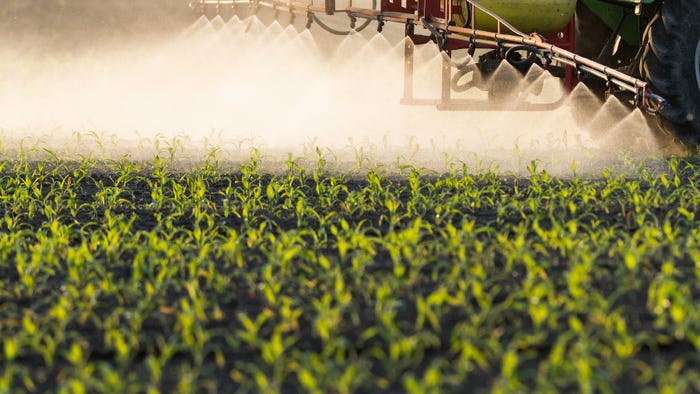
Applicator equipped GreenSeeker optical sensors use N-rich strips to variable-rate apply liquid N in-season. Robert, Jerome and Justin Goettl rely on a coulter-cart system similar to this one to boost yields with fewer gallons of liquid N.

Photo: Trimble

Hard data plus intuition

Robert Goettl admits that adopting the technology requires flexibility and a certain level of intuition. A week to 10 days ahead of field application, the brothers create an N-rich strip by applying a minimum 10-25 gal. N, depending on field history, to an average part of a field.

The corn’s V5 stage or a little earlier is Goettl’s optimum window. An initial dry run through the field across the N-rich strip and base area lets him set parameters for minimum and maximum rates. This is where field knowledge comes into play.

“Some fields may indicate a range of 0-35 gal., while others show 10-25 gal.,” says Goettl. “We find a broader range is needed on clay hills than on flat, black ground. And the more variability in the field, the broader the range you want to set.”

The Goettls say they are now putting more N down where it is needed, and the timing of the application allows the crop to use it more efficiently. Overall, they are using much less N than they did before using GreenSeeker, though their base rate has increased and their in-season 28% and 32% applications have remained constant overall.

“We average around 16-18 gal./acre, but it can vary from zero to 35 gal./acre,” says Goettl. “We know we are making better yields and making more money.”

A Nebraska farmer, Matt Helmke, relies on a customer with an Ag Leader OptRx system to variable-rate apply N to his corn at the V6 stage. The precision ag specialist for a local retailer also raises corn and soybeans near Pickrell. “The system is mounted on a Hagie sprayer with drop nozzles on the boom,” says Helmke. “We saw more than a 10-bu./acre increase in 2011 using the same amount of N, just rearranging where we put it.”

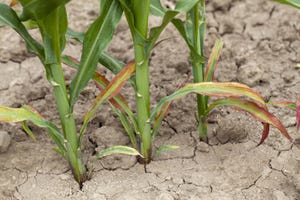
Helmke found that corn planted on ground with lower organic matter and lower soybean yields the previous year matured too quickly due to N deficiency. “Taking out the nitrogen stress allowed the plants to increase seed-fill time and increase yield,” he says. “Environmentally, we are now more efficient with our N because there is less chance of runoff or leaching, compared to fall anhydrous ammonia applications. We also avoid disturbing the soil and losing moisture, which can happen when knifing in N.”

With few growers in his area side-dressing their corn, Helmke isn’t surprised at the slower rate of optical sensing adoption, compared to other precision ag technologies, noting that it requires a change in operation. “It’s like any other new technology,” he says. “Interest is high, with everyone looking at the early adopters who have implemented it in their systems.”


Discuss this Article 0

Post new comment
Sign In or register to use your Corn and Soybean Digest ID
(optional)

Newsletter Signup

Continuing Education Courses
New Course

Accredited for 2 hours/CCA Soil & Water credits. The 2,000 member...

This online CE course details sound mechanical irrigation design and management practices to...
Keeping crop protection chemicals on the crop for which they are intended has been a...
Connect With Us