Sensored Soils Boost Agronomics | New Sensor Technology is the Next Management Frontier

What is in this article?:

  • Sensored Soils Boost Agronomics | New Sensor Technology is the Next Management Frontier
  • Fusion is the key


Think different

Here are just a few of the sensor technologies coming to a field near you:

  • Soil moisture and nutrient sensors will predict denitrification and leaching.
  • Herbicide rate advisories based on root readings of the plant hormone auxin, which regulates root growth and seedling establishment.
  • Microsensor feedback on nutrient use, N form, oxygen availability, water stress and soil conditions. Optical sensors can ask a plant if it is healthy or not relative to N use.
  • Gamma ray spectroscopy will measure soil textures.
  • Ground-penetrating radars will fine-tune water management.
  • Real-time, on-the-go canopy sensing integrated with field data like soil, yield and remote imagery.
  • Disposable "on-the-chip" sensors to get real time assessment of nutrient bioavailability.

Growers with access to Veris sensing systems can now see their fields' soil electric conductivity, organic matter and pH.

Photo: Veris


Imagine, or just push the fast-forward button: You activate your sensor network to take soil, root and leaf readings and report data. You receive temperature, moisture, plant hormone levels and more from georeferenced points. Your computer integrates them with already-identified and mapped organic matter (OM), pH and electrical conductivity (EC) zones in those fields, with the specific variety planted.

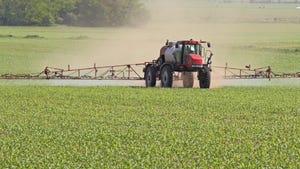
You output an application map with recommended rates varied by zones for selected herbicides. Download the map to the crop-reflectance-camera-equipped applicator for more refinement on the go. As it crosses the same field, ratio and volume vary according to crop and weed biomass levels and reflectance values. The end result is maximum weed control, minimal crop impact and least-cost application.

Much of this data is already available. Some of the sensors and the network to power and operate them are still under development. Some are still being envisioned by ag researchers studying the fast-changing world of field and crop sensor technologies.

Other scenarios include in-crop sensing of available nitrate forms and conditions such as temperature and soil moisture likely to impact near-term conversion, as well as uptake. Adjusting application rates accordingly would offer maximum yield at least cost per additional unit of input.

"The goal is a complete picture of what's happening in the field," says Chad Fick, OptRx product specialist, Ag Leader Technology. "Right now optical sensors can ask a plant if it is healthy or not relative to nitrogen utilization. However, this is a more complex question than simply N, and this is where the technology is going, not just to the major elements, but to a bigger picture of what is happening in the field to help growers make decisions based on what's available to them at the time."


Discuss this Article 0

Post new comment
Sign In or register to use your Corn and Soybean Digest ID
(optional)

Newsletter Signup

Continuing Education Courses
New Course

Accredited for 2 hours/CCA Soil & Water credits. The 2,000 member...

This online CE course details sound mechanical irrigation design and management practices to...
Keeping crop protection chemicals on the crop for which they are intended has been a...
Connect With Us