More About:
Advertisement
SOYBEAN CYST NEMATODE (SCN)
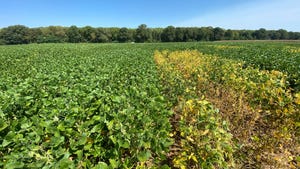
- SYMPTOMS: Difficult to spot in high-yielding fields or when soil moisture is optimal. Yellowing and stunting of plants; white to yellow lemon-shaped cysts on roots.
- TIME OF ATTACK: As soil warms and root systems develop.
- CONDITIONS FAVORING: Those that favor soybean growth. May first appear near field entrances, flooded areas, weedy areas, high-pH spots, lower-yielding areas. Moisture and fertility stress can enhance disease.
- MANAGEMENT: Crop rotation, resistant varieties (rotate resistant varieties as well), introduction prevention. Test soil samples.
SUDDEN DEATH SYNDROME (SDS)
- SYMPTOMS: Leaves become brown, with veins remaining green; leaf blades drop off but petioles remain attached. Brown to gray discoloration of internal taproot.
- TIME OF ATTACK: During pod set and fill.
- CONDITIONS FAVORING: Cool, wet conditions throughout summer; well-fertilized fields; early planting/maturity; soil compaction; fields with history of SDS; co-infection with SCN.
- MANAGEMENT: Resistant cultivars; avoid early planting — wait until soils are warmer and drier; eliminate soil compaction.
CHARCOAL ROT
- SYMPTOMS: Small, black sclerotia form on lower stem and roots, both internally and externally. Early season infection produces red-brown lesions. Premature plant death; plants wilt and eventually die.
- TIME OF ATTACK: R3-R6
- CONDITIONS FAVORING: Extended periods of hot, dry weather.
- MANAGEMENT: Reduced plant populations; rotation; planting fullest maturity group; irrigation, if available. No way to stave off damage in drought year.
ROOT ROTS
- TYPES: Phytophthora, Rhizoctonia, Fusarium
- SYMPTOMS: Rhizoctonia: reddish-brown lesions, damping off at seedling stage; Fusarium: dark discoloration, reddish-brown or stunted roots; Phytophthora: pre/postemergence damping off, wilting, plant death.
- TIME OF ATTACK: Phytophthora: shortly after planting in saturated soils; Rhizoctonia: dry to very wet soils; Fusarium: after warm, humid weather.
- CONDITIONS FAVORING: Cool, wet spring weather; saturated soils for most root rots; warm, humid weather for Fusarium.
- MANAGEMENT: Improved drainage, crop rotation, cultivation.
SEEDLING BLIGHT
- SYMPTOMS: Seed rot. Seedlings may grow poorly, turn yellow and die. Dieback of young plants with damping-off of lower stem.
- TIME OF ATTACK: Emergence to 2-3 weeks later.
- CONDITIONS FAVORING: Cool, wet soil; soil crusting; temporary flooding following planting.
- MANAGEMENT: Seed treatments; delayed planting until soils are warmer/drier; plant high-quality seed with high germ and vigor.
FROGEYE LEAF SPOT
- SYMPTOMS: Lesions appear as small, round gray spots with dark reddish-brown borders on upper leaf surfaces.
- TIME OF ATTACK: R3-R6; after frequent rains.
- CONDITIONS FAVORING: Warm, humid weather.
- MANAGEMENT: Resistant varieties; timely, necessary fungicide application.
WHITE MOLD
- SYMPTOMS: White growth on stems; hard, black fungal structures form in lesions on stem or inside stem. Leaves turn completely brown (die), but stay attached to stem.
- TIME OF ATTACK: R4-R6
- CONDITIONS FAVORING: Rain, cool temps, high humidity, mois soil in closed canopy during flowering and early pod development.
- MANAGEMENT: Resistant varieties, seed treatment, no-till.
PHYTOPHTHORA
- SYMPTOMS: Yellow, wilting plants. Stand reduction caused by seed rot or damping off. Lower stems of infected plants have dark brown lesions that grow up from base of the plant.
- TIME OF ATTACK: VE-R6; 1-2 weeks after excessive rain.
- CONDITIONS FAVORING: Periods of high soil moisture and rainfall, especially after planting.
- MANAGEMENT: Resistant varieties, crop rotation, improved drainage.
SOYBEAN RUST
- SYMPTOMS: Small tan or reddish-brown lesions on lower leaf surfaces within yellow areas of leaf. Mature lesions have volcano-like pustules on lower leaf surfaces.
- TIME OF ATTACK: All stages.
- CONDITIONS FAVORING: Periods of cool, wet weather or high humidity when pathogen is present.
- MANAGEMENT: Fungicide application when necessary.