Build a Robust Soil-Plant Future Farm

We have overlooked the value of soil biology.

Think Different

  • Soil is alive with organisms that convert air, water, organic matter and soil nutrients into a robust soil-plant system that can supplement and enhance seed, nutrient and crop protection technologies.
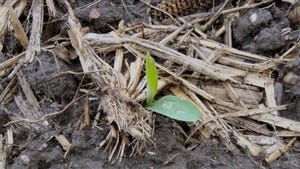
  • Evaluate your soil-plant system as a synergistic, holistic system – not isolated tools of tillage, drainage and nutrient management. If you change or alter one tool, such as a transition to no-till, consider how to modify other factors for success.
  • Rethink field management over an entire year, not simply in-crop. If corn-on-corn maximizes your economic opportunity, consider intercrop rotation with a cover crop.
  • Create a long-term plan to improve and enhance soil conditions and track your progress. 

More About:

IMPROVE SOIL HEALTH

Just what are healthier soils? How do they impact crop growth? Nester points to more earthworms and better soil structure. Sundermeier points to water infiltration and increased organic matter. Hatfield points to biological components that can offset challenges to the plant.

“We are still working out how to bring together biological, chemical and physical measurements to evaluate both the soil and plant components,” says Hatfield. “For example, in cover crops, the growing roots supply fresh root material for the microbes to eat throughout a longer period of time.”

Senyu Chen, plant pathologist, Southern Research and Outreach Center, University of Minnesota, has taken that concept even further. He’s identified endoparasitic fungi that can biologically disrupt SCN. These friendly fungi seem to be more common in continuous-soybean than in corn-soybean rotations. He’s researching whether the endoparasite can be introduced into non-suppressive soils, whether in more common corn/soybean rotations, continuous corn or continuous soybean rotations.

Searching for a better understanding of SCN, Chen’s research team has identified SCN-suppressive soils. He defines them as soils that naturally contain physical, biochemical and biological factors that suppress SCN. These factors include fungal parasites of SCN, such as one that forms a special device that can catch nematodes in the soil, and extracellular enzyme activity related to suppression.

“We are mainly looking at SCN, but also at other nematodes, including those that act on corn,” Chen explains. “We are asking why one field is suppressive to SCN and others aren’t. What is the cooperating system of rotation and tillage that can influence suppression?


Discuss this Article 1

smithdamon13
on Apr 5, 2013

Before farming any crop for a season it is better to make a plan about everything like soil, fertilizers etc so that the yield will be high. Same kind of crop should not be farmed each year as it can degrade the value of soil. Cross farming is better and will help to retain the soil its essential nutrients.
plant foods

Post new comment
Sign In or register to use your Corn and Soybean Digest ID
(optional)

Newsletter Signup

Continuing Education Courses
New Course

Accredited for 2 hours/CCA Soil & Water credits. The 2,000 member...

This online CE course details sound mechanical irrigation design and management practices to...
Keeping crop protection chemicals on the crop for which they are intended has been a...
Connect With Us