Btus From Biomass – What’s Next? | Next-generation fuels face big hurdles

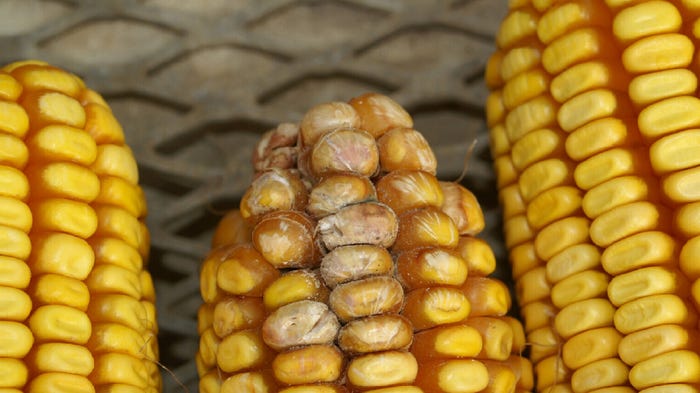
The second generation of U.S. biofuels will not use much corn. It will depend instead on biomass such as wood waste, crop residues, municipal solid waste, algae and dedicated energy crops like switchgrass. One Florida plant will use sugarcane and bagasse; one in Louisiana will use rice hulls. Poet, the world’s largest ethanol producer, plans to base 26 plants’ production on corn cobs, leaves and husks.

There are two kinds of next-generation biofuels, both made from cellulose. One is cellulosic ethanol, distilled from plant fibers. The other kind, known as drop-in fuel, is also made from cellulose through thermochemical conversion processes. These “advanced biofuels” include green gasoline, green diesel, biojet and biobutanol. Unlike cellulosic ethanol, these drop-in fuels are close substitutes for gas, diesel or jet fuel in today’s engines without warranty, pipeline or gas-pump infrastructure concerns.

This fork in the road for next-gen fuels may be shaped as much by fuel transportation logistics and engine warranties as by the technical wizardry of wringing Btus from biomass.

“Almost all the effort at universities and most of the federal research money today is focused on drop-in fuels,” says Iowa State University BioEconomy Institute Deputy Director Jill Euken. “This is because of the blend wall and the lack of a market for more ethanol. We simply do not have sufficient U.S. infrastructure (flex-fuel vehicles and E-85 pumps) to support more ethanol sales. Even if EPA approves E-15, we currently have nearly enough production capacity to fill the E-15 demand level without building any cellulosic ethanol capacity.”

That partially explains why 1.98 billion gallons of ethanol capacity was shut down during much of 2009, says Wally Tyner, Purdue ag economist. “It also explains why ethanol prices during much of the year were driven mainly by corn instead of by gasoline as it had been previously,” he says.

The venture-capital world doubts that we will invest in more E85-compatible fleet development, pumps and infrastructure the way Brazil has, Euken says. “That is why we have the push for drop-in fuel that can work right now in existing pipelines and pumps.”

According to Tyner’s 2010 study, if the current 10% blend wall is not raised, the 35-billion-gallon 2022 Renewable Fuel Standard (RFS) could be met with drop-in fuels (cellulosic fuels derived from thermochemical processes rather than from biochemical processes). “In other words, these pathways place little dependence on the E85 market, as all the cellulosic feedstocks go directly to hydrocarbons,” Tyner concludes.

A team from DOE, EPA and USDA will coordinate biofuel advances that meet the definition of “drop in,” report Automotive Industries and Biofuels Digest. “Which bio-material can be made in the huge quantities needed as substitutes for petroleum?” asks Auto-motive Industries. “While the best answer may be algae, even at the favorable yield of 5,000 gal/acre/year, millions of acres would be needed to significantly replace U.S. petroleum use.”

There are big hurdles to both kinds of next-gen biofuels: high costs, technology and growing and transporting enough feedstocks.

Besides the high cost and investment risk of launching next-gen biofuel plants, what will prompt farmers to grow enough cellulosic-ethanol feedstocks to meet the RFS? A 2008 report by the Biomass Research and Development Board estimates farmers will need to earn $40-60/dry ton of biomass to produce enough. University of Minnesota research by Morey, Tiffany, Kalyan and Schmidt suggests that prices for densified corn stover compacted to 15 lbs./cu. ft. may need to be $77/ton to adequately compensate farmers for fall tillage delays and nutrient removal. Poet will pay $40-60/ton for corn crop residue to fuel its Emmetsburg, IA, cellulosic ethanol plant when it opens in 2012.

“The big winners in next-gen biofuels are expected to be enzyme makers, forest companies and the agricultural sector,” says Swiss investment bank UBS. It pegs Weyerhaeuser and enzyme-makers Novozymes and Danisco as the main benefactors of bio-based ethanol and biodiesel.

While the recession has choked off venture capital, the DOE allocated $564 million in the stimulus package for 19 integrated biorefinery projects, says the USDA Economic Research Service (ERS). This is part of $2 billion in federal funding in private sector next-gen biofuel support and university research, including biomass projects, ERS says. Add to that various state projects, plus $134.5 million in USDA loan guarantees to develop new technologies to produce non-corn, biomass-derived ethanol, ERS says.

Loan guarantees still hinge on a willing lender, and the recession has made lenders very risk-averse.

Oil companies, along with GM, Weyerhaeuser, Novozymes, Honeywell, Dow Chemical and DuPont are already in joint ventures with cellulosic producers Iogen, Verenium and Qteros. Perhaps these joint ventures will replace venture capital as the new economic engine for second-gen fuels in a recessionary environment.

Long term, crop residues and dedicated energy crops are the most significant potential sources of cellulosic ethanol feedstocks, say USDA, DOE and EPA studies.

Achieving the federal objective of 21 billion gallons of second-generation biofuels made from non-grain feedstocks by 2022 is a bold objective,” says Douglas Tiffany, University of Minnesota Extension energy economist. “Consider that the U.S. annual corn-based ethanol production grew by only 9.3 billion gallons in the same amount of time” using well-understood commodity crop standards and fermentation technology. “Expanding second-generation biofuels is complex because it involves biomass in many varieties and conditions that don’t fit neat commodity grades,” Tiffany says.

USDA’s Chief Economist Joe Glauber agrees: “The technology for affordable production of non-corn ethanol remains uncertain, he said in April. The Obama administration slashed the nation’s 2010 cellulosic-ethanol mandate to 6.5 million gallons from the 100 million required under a 2007 energy law.

Total production capacity for next-generation biofuels, including cellulosic biofuel, biobutanol, and bio-based petroleum equivalents, is expected to be about 88 million gallons per year by the end of 2010, less than the average capacity of a single new corn ethanol plant. (A large share is from one company, Dynamic Fuels. Its Geismar, LA, plant opens later this year to produce a bio-based diesel fuel from animal fat, ERS says.) Total sector capacity is expected to surpass 350 million gallons by 2012, ERS forecasts.

The first commercial next-generation biofuel plant should open this year in Soperton, GA, in a partnership between Range Fuels and Dynamic Fuels, ERS says. Initially it will produce methanol from pine-tree waste, and eventually it will produce ethanol.

Poet may have the first commercial cellulosic ethanol plant, ERS says. Using cobs, leaves and husks, it is co-located next to its existing Emmetsburg, IA, corn ethanol plant and will open in 2012. Thanks to new enzymes, Poet expects to lower cellulosic ethanol production costs to just 50¢/gal. above those for corn ethanol.

Eventually Poet plans to move beyond corn-crop residue feedstock. “Biomass is everywhere,” says Poet’s Project Liberty Director Jim Sturdevant. “There can be a 50-state solution to meeting U.S. fuel needs.”

Cob-based energy
Distilling energy from corn residue could be one of the first commercial methods to produce cellulosic ethanol. Poet is pursuing an integrated starch- and cellulose-to-ethanol biorefinery model that could be added to its 26 corn-ethanol plants.

This Project Liberty, Emmetsburg, IA, cellulosic ethanol project will run on corn cobs, leaves and husks. This biomass could produce 25 million gallons of cellulosic ethanol/year there, and 5 billion gallons of cellulosic ethanol annually if adopted more widely throughout the Corn Belt, Poet says.

The firm’s new raw-starch hydrolysis process converts starch to sugar and ferments corn stover to ethanol using enzymes, not heat. This advance reduces plant energy use by 8-15% and also reduces cooling-water needs.

The plant has lowered its production costs by 40% in one year, says Poet’s Jim Sturdevant. The goal is to drop that below $2/gal. when the plant opens commercially in 2012.

“Another synergy is that cellulosic ethanol’s byproduct, biogas, will be a source of process heat for both the cellulosic plant and adjacent corn-ethanol plant, eliminating our need for natural gas. This increases efficiency, reduces costs, and reduces greenhouse-gas emissions. A recent independent lifecycle analysis of the Project Liberty process showed that its greenhouse-gas emissions will be 111% less than greenhouse gas emissions from the gasoline production process,” Sturdevant says.

By 2022, Poet plans to be involved in producing 3.5 billion gallons of cellulosic ethanol by increasing its production, licensing the technology to others and adopting the technology to new feedstock.

Growers could gain
“Our business model seeks to leverage the existing infrastructure around our 26 corn-ethanol plants, each with 600-700 growers who can provide cellulosic feedstock” says Poet’s Jim Sturdevant.

Poet’s Emmetsburg, IA, plant will need 300,000-400,000 acres’ worth of corn cobs and stover annually, or about one-third of the cobs within a 35-mile radius of the plant.
Farmers who deliver cobs and stover to the plant may qualify for DOE and USDA incentive programs.

August 2010

Discuss this Article 1

Gehan (not verified)
on Aug 14, 2012

One of the companies that is slenilg to the military is Solazyme (SZYM), now a publicly listed company, which is well financed and has many joint ventures with leading companies. It makes oil and chemicals from algae. At first, I thought there is not enough water surface to grow algae and this wasn't viable, but it can be grown rapidly in tanks. Some types of algae will eat phosphates and nitrogen compounds, that cause polluted, dead water, which would clean the water and produced oil. The reason why the military is buying this is because it has a research budget. The military strategically is also thinking about what if scenarios, i.e. can it use other fuels? Commercial airlines are testing the fuels too, so the military would be behind the curve if it didn't. It can use algal based fuels because they are compatible, because it is believed algae helped form petroleum deposits.See: Dr. Timothy Devarenne, AgriLife Research scientist with the Texas A&M University department of biochemistry and biophysics points out, “Oils from the green algae Botryococcus braunii can be readily detected in petroleum deposits and coal deposits suggesting that B. braunii has been a contributor to developing these deposits and may be the major contributor. This means that we are already using these oils to produce gasoline from petroleum.” He’s implying rather directly that green algae producing hydrocarbon oil as a biofuel production process is nothing new; nature has been doing so for hundreds of millions of years. The process of making it is not in the industrial stage; it is in the model plant stage, where experimental small scale production is done to research the best industrial process. So, no product is cheap here. Do you think when AT&T developed the first transistor it cost pennies even decades ago? DARPA was one of the first agencies (along with CERN) to develop the early Internet decades ago. The cost of that was buried in the research budget, but no doubt anyway here will think it was well spent. For that matter, when it comes to energy research, how do you think we got nuclear energy? It was mostly gov't sponsored. Why do you think light water reactors became the chosen technology so the gov't could have material for atomic bombs. Nothing new here folks about energy and the gov't. By the way, many of the companies are US companies using algal technology developed here. I'm not a liberal, and I don't think the government should fund the construction of plants, like it did with Solyndra, which is too risky. However, the DOD and DOE programs (in the later case I'm referring to the one's the Bush administration started) for alternative energy fund a small portion of equity while private equity makes up the bulk. The money isn't much as a percent of the department budget and is likely less waste than other things they do. A few decades ago, the gov't used to sponsor more research at universities, but now it's doing more with the private sector, b/c of the extra boost from private money it's not picking winners. This isn't so far from the prior nuclear research.Most of the commentors here don't seem to know the algal technology very well and assume it's just all bad, but with no specific facts. If you read much you'll see that the venture capital community has been pouring money into energy alternatives in the past seven years or so. Like all venture funding the % of losers outweighs the winners, but the profit from the winners more than offsets the losers. Someone's going to make a lot of money. Do you think you're smart enough to figure out who?

Post new comment
Sign In or register to use your Corn and Soybean Digest ID
(optional)

Newsletter Signup

Continuing Education Courses
New Course

Accredited for 2 hours/CCA Soil & Water credits. The 2,000 member...

This online CE course details sound mechanical irrigation design and management practices to...
Keeping crop protection chemicals on the crop for which they are intended has been a...
Connect With Us