6 Reasons a New Farm Bill is Necessary


Congress is coming perilously close to leaving Washington, D.C., without passing a farm bill. It is vitally important that a new five-year farm bill to be signed into law before Jan. 1, 2013 for the following reasons.

  1. Thirty-seven programs that were included in the 2008 Farm Bill did not include baseline funding beyond Sept. 30. In order for these very important programs – five of which of which deal with conservation efforts and eight are related to renewable energy production – to continue, funding must be authorized in a new farm bill and they will continue to be dormant after Jan. 1.
  2. Major dairy programs – including Milk Income Loss Contracts (MILC) and the Dairy Product Price Support Program (DPPSP) – expired with the end of the 2008 Farm Bill. If no action is taken on the farm bill by Jan. 1, federal dairy policy will revert to 1938 and 1949 law. This would result in a parity-based government-backed price of about $38/hundredweight for milk. Although farmers may benefit in the short run, the longer-term effects of a government buy-up of dairy products would be damaging to the dairy industry and consumption patterns.
  3. Further challenges related to commodities will arise at the first harvest of the 2013 crop year in late spring, when winter wheat will be also be subject to 1938 and 1949 law. Commodities harvested thereafter would be subject to parity pricing structures that are not in step with today’s economy.
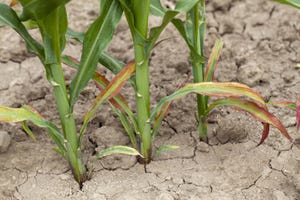
  4. There is no permanent disaster protection program in place, even as most of the counties across the nation were declared agricultural disaster areas by the USDA at some point during 2012, and 55% of the nation’s pasture and rangeland rated in poor to very poor condition.
  5. Like any business, farmers need certainty in today’s challenging economic times. Further delays in writing a five-year farm bill are problematic as farmers try to plan for the future or to secure credit. Agriculture employs 16 million Americans and Congress must provide some stability for those farmers, ranchers and rural businesses.
  6. An opportunity to make major reforms to farm policy will be lost if no action is taken by Jan. 1. Both the House Agriculture Committee and the Senate versions of the farm bill eliminate the much-criticized direct-payments program, which pays crop farmers regardless of whether prices are high or low. If that program were extended for just one year, it would eliminate at least $5 billion of the $23 billion in budget savings in the Senate-passed bill. Congress can preserve those savings by passing a five-year farm bill this year that ends the direct payments program.

For these reasons, we stand united in support of a new five-year farm bill; any temporary extension would be a short-sighted, inadequate solution that would leave our rural America crippled by uncertainty. If a new farm bill is not passed by the end of the year, even deeper effects will be felt by all sectors of agriculture that will jeopardize the long-term viability of farm and conservation programs.

Discuss this Article 3

Lon Truly (not verified)
on Dec 22, 2012

So if milk prices double that is a total disaster, but government mandates doubling or tripling corn and soybean prices is wonderful?

mike sullivan
on Dec 22, 2012

Milk prices, meat prices and grain prices will increase dramatically short term without a Farm Bill. This may seem good for producers but in the end it will do more damage. We as producers need a steady profit but a dependable one. The government and most consumers do not understand where their food comes from and they do not understand how cheap it is compared to world prices. We have the most dependable, safest, and cheapest food supply in the world.

Richard L (not verified)
on Jan 1, 2013

So, it's basically agricultural welfare program only your aren't penalized for having financially successful years, correct? Seems the industry I work the technology industry, should also be subsidized so I can count on money when my employee determines they had off years and make the business decision not to give me a raise.

Post new comment
Sign In or register to use your Corn and Soybean Digest ID
(optional)

Newsletter Signup

Continuing Education Courses
New Course

Accredited for 2 hours/CCA Soil & Water credits. The 2,000 member...

This online CE course details sound mechanical irrigation design and management practices to...
Keeping crop protection chemicals on the crop for which they are intended has been a...
Connect With Us