-
Sensored Soils Boost Agronomics
Imagine, or just push the fast-forward button: You activate your sensor network to take soil, root and leaf readings and report data. You receive temperature, moisture, plant hormone levels and more from georeferenced points. Your computer integrates them with already-identified and mapped organic matter (OM), pH and electrical conductivity (EC) zones in those fields, with the specific variety planted.
Photo: Veris
-
Slow Your Soil
The most effective way to slow your topsoil and keep it in place is less tillage, says Iowa State University (ISU) Extension Field Agronomist Clarke McGrath, in southwest Iowa. “Nothing can prevent all soil erosion, but established no-till fields will have better erosion resistance and water infiltration than minimum-till fields, and minimum-till fields will be better than conventional till.”
Photo: Kurt Lawton
-
Ukraine Poised for Growth
Ukraine’s black soil is what everyone talks about. “It looks like Iowa,” says Cary Sifferath, a Midwesterner who monitors Ukraine for the U.S. Grains Council. Tim Burrack, an Arlington, Iowa, farmer, is almost poetic about it: “It’s a black, deep, beautiful soil with good drainage, and after perestroika and the breakup of the Soviet Union, it was just lying there idle.”
-
A $628,000 Decision
Let’s examine how a crop-insurance coverage decision made a $628,492 difference to one farmer. It illustrates the high stakes of insurance decisions. For this enterprise, it made the difference between choosing $5/acre coverage, leading him to a $523,972 loss, and paying $87/acre and profiting by $104,520.
Photo: Kurt Lawton
-
Build a Robust Soil-Plant Future Farm
Trend-setter advocates increasingly believe that a farming for the future philosophy is critical. Farmers who build a long-term base of soil health as the foundation for long-term profits will be miles ahead compared to simply growing next year's crop. Researchers, consultants and progressive farmers believe a more holistic, long-term approach is required to raise the bar on future productivity.
Photo: Nester Ag, LLC
-
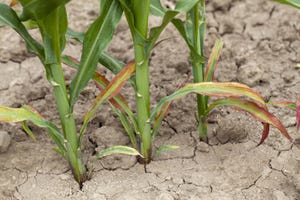
The Roots of Plant Health
"You don't need any magic or added products," says Bruce Potter, University of Minnesota integrated pest management specialist. "Most of what you need to improve root health are simply good agronomic practices. Proper seedbed preparation, residue management, adequate nutrients, the correct hybrid or variety selection, seed placement and good drainage are the fundamentals. If you're not doing the basics right, there's no point in fine-tuning other things."
Photo: Syngenta
-
Brazilian Corn Conundrum
A soybean powerhouse, Brazil is also a growing force in corn, as demonstrated last year when it increased corn production by 31% to almost 2.9 billion bushels. With that record crop, Brazil’s exports also jumped. Now the USDA’s Foreign Agricultural Service expects Brazilian farmers to set another planting record for both corn and soybeans this year.
-
Relearn Residuals
Pre-emergence residual herbicides lower weed densities, improve early season weed control, extend the window for post-emergence applications, and lower the potential for crop yield losses from weed competition, says Minnesota weed scientist Jeff Gunsolus. That’s why he likes to say: “If it’s a good day to plant, it’s a good day to apply a pre.”
Photo: Harlen Persinger
-
Cover Crop Info Swap
Dave Rodibaugh wants more from his cover crops. In addition to seeking advice from his local Extension officers or seed company representatives, he talks to neighbors.
Rodibaugh, who farms a little more than 2,000 acres in Renssalaer, Ind., is one of a dozen farmers participating in an informal peer group organized by Dan Perkins, Jasper County Soil & Water Conservation District program specialist. The growers meet regularly to discuss farm-related topics, examine new ideas and talk about what works and what doesn’t on their farms.
Photo: Keena Lykins
-
Reverse Erosion
Do you base farm decisions on soil quality? Clay Mitchell does, as he deems it the ultimate resource. That’s why he redistributes accumulated topsoil across parts of his family’s 2,500-acre Buckingham, Iowa, corn and soybean operation. Besides building long-term soil productivity, moving surplus topsoil from valley to hilltop also boosts land value.
Photo: Mitchell Farms
Over the last year, we've done our best to help our readers Think Different. From management practices to conservation to global competition to data management, we're striving to give you the best. Here's a recap of our favorite Think Different stories from the November, Late November and December issues. From sensors and root and soil health to residual herbicide use and sharing cover crop information, so much is here to help you Think Different about your farming operation.