Make Variable Seeding Work

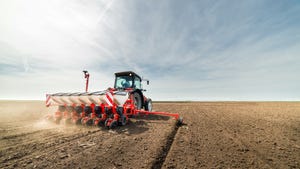
Variable-rate planting can boost profits but requires good data.

What is in this article?:

Think Different

The interactions between corn plant population, genetics, soil type, fertility, crop rotation, pest control, tillage and weather are very complex, says Joel Wipperfurth, master agronomy adviser for Winfield, Owatonna, Minn. That’s why it’s important to evaluate the effectiveness of a variable-rate seeding program on a farm-by-farm basis, he says.

One way to do that is to plant check strips of higher and lower seeding rates alongside the prescribed rate in each management zone within a field. If a lower seeding rate produced the same yield as the prescribed rate, for example, you might want to adjust the prescription the next year.

To make it easier to measure the results of VRS, Bob Gunzenhauser, DuPont Pioneer, suggests that growers try three or four different seeding rates, each differing by about four thousand seeds/acre.

Keith Alverson and his family started to variable-rate plant in the 1990s, and now find benefit with the practice on every corn acre. He, his father Ron and uncle grow corn and soybeans on rolling land near Chester, S.D. In the early 1990s, they started reducing seeding rates manually in the dry corners of pivot-irrigated fields, where yield potential is always much lower. The practice cut seed costs by 25% in unwatered sections, and was especially beneficial in dry years, Alverson says.

Eventually, they extended the practice inside their irrigated circles and then to non-irrigated fields, where soils are characterized by bands of gravel glacial outwash and eroded clay knobs that lend themselves to variable-rate planting.

Now, they use it on every corn acre, Alverson says. “We’ve found it pays off in good years and bad years. It not only reduces seed costs, but makes us money by reducing lost yield and placing seeds where they need to be.”

There’s a lot of interest in variable-rate seeding (VRS) for corn, which tries to match planting rates and yield potential, says Gregg Carlson, South Dakota State University (SDSU) plant scientist. “The concept makes good sense to producers.”

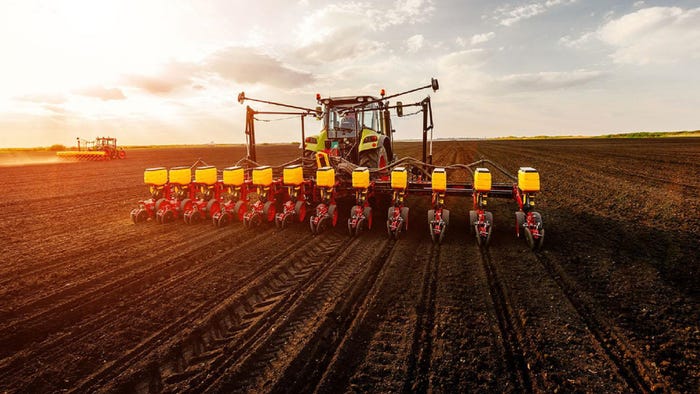
Yield maps clearly show significant spatial variability within fields. Valuable seeds and crops boost potential returns from VRS. And many farmers already own software that can generate prescription maps and planters that can do variable-rate seeding on-the-go.

In addition, plant population studies across the Corn Belt have shown the value of higher seeding rates in high-yield environments and lower rates in less-productive soils, such as droughty hilltops, says Kurt Reitsma, SDSU Extension precision agriculture specialist. “For example, in South Dakota, our main yield-limiting factor is rainfall, and variable-rate seeding is one way to manage water.”

Yet, practical questions abound about VRS, says Pat Reeg, technology manager for the Iowa Soybean Association On-Farm Network: What’s the best way to delineate consistent VRS management zones? What seeding rates should you use? Does VRS increase yield, cut costs and raise profits?

“Variable-rate planting has the potential to do all of these things,” Reeg says, “but research demonstrates that profits can also be reduced by adjusting seeding rates. Predicting where and by how much you should vary seeding rates is challenging and may not be repeatable from one year to the next.” (His study is at http://bit.ly/ZMC055)

Bob Gunzenhauser, mapping services manager at DuPont Pioneer, agrees: “There are opportunities available for variable rate seeding, but also limitations and confounding issues.”

Carlson adds that these issues make variable-rate planting one of the most significant management topics for producers today.


Discuss this Article 0

Post new comment
Sign In or register to use your Corn and Soybean Digest ID
(optional)

Newsletter Signup

Continuing Education Courses
New Course

Accredited for 2 hours/CCA Soil & Water credits. The 2,000 member...

This online CE course details sound mechanical irrigation design and management practices to...
Keeping crop protection chemicals on the crop for which they are intended has been a...
Connect With Us