North Dakota Corn Yield Trials Have Success with Conventional Corn Hybrids

Conventional Corn Success | Northern Plot Non-GM Hybrid Yields 286 Bu.

What is in this article?:

  • North Dakota Corn Yield Trials Have Success with Conventional Corn Hybrids
  • Non-GM Seed Demand

Think Different

High-yielding, conventional hybrids may fit your fields if:

  • You scout your fields, haven't seen European Corn Borer or adult corn rootworm moths in several years and have over-the-top treatment available if needed.
  • You maintain a multiple crop rotation strategy or are reintroducing corn after several years in other crops.
  • One or more corn rootworm traits appear to be failing, glyphosate resistant weeds or increasing levels of secondary pests are forcing you to consider in-furrow protection and residual herbicides regardless of hybrids selected.


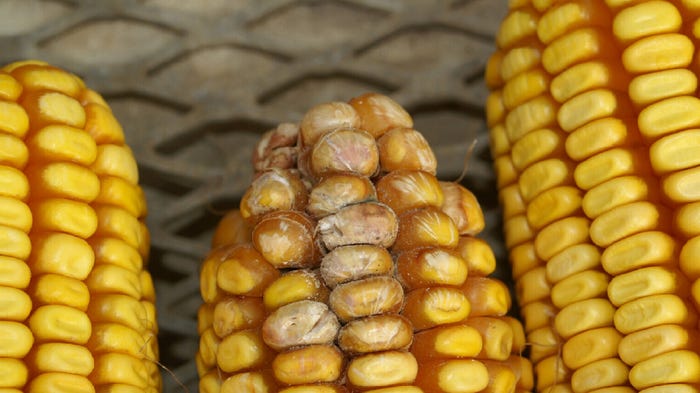
GM hybrids aren't the only "elite" germplasm. G2 Genetics' 3-H-399 AgrisureRW hybrid, with a full complement of GM (genetically modified) traits, captured headlines with a record 309.5 bu./acre yield in the North Dakota University (NDSU) irrigated corn trials. However, the runner up may suggest an even bigger story.

With U.S. growers choosing to plant 88% of all corn acres to genetically engineered hybrids in 2012, one might think the day of conventional hybrids is over. Don't tell that to Walter Albus, research agronomist at Oakes Irrigation Research Site, Oakes, N.D. He reports that DS1803, a conventional hybrid from Dairyland, took second place in the irrigated yield trials with 286 bu./acre. Adding to the feat was the minimal inputs it received.

"None of the hybrids in the plots received any seed treatments, in-furrow or over-the-top applications of crop protectants," reports Albus. "The only seed treatment on any seed was what came in the bag. All plots were replicated four times with their yields averaged for the results."

Due to several conventional hybrids’ inclusion in the trial, none of the plots received postemerge glyphosate applications. Weed control on all plots was a burndown treatment of glyphosate. A pre-emerge treatment was a pint each of Lumax and Harness with enough additional atrazine to total 0.6 lb. of total atrazine.


Like what you're reading? Subscribe to Corn E-Digest and get the latest news right to your inbox!


Fertilizer applications were not unusual either. All the plots received 26 lbs. of nitrogen (N) in late March and another 53 lbs. during strip tillage in late April. All plots were sidedressed with 155 lbs. of N in early June for a total of 234 lbs. of N/acre, a level Albus has found adequate in the past.

"Longtime research at Oakes on N rates for continuous irrigated corn in research plots and fields has shown yields maximize between 180 and 240 lbs./acre N," he says.

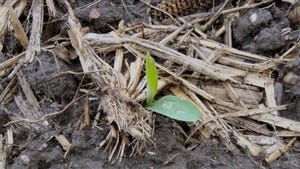
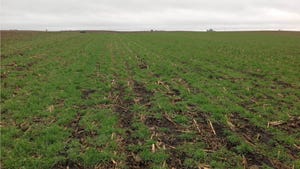
The seedbed may have contributed to the high yields under low inputs, especially having been corn-free for at least seven years, reducing potential incidence of disease and insects to stress the conventional corn in 2012. "This year's trial was especially interesting," says Albus. "In the past, we’ve generally planted on soybean or potato ground for highest yields. This year we planted in last year's irrigated wheat stubble. The straw had been left, and the stubble mowed short. We strip-tilled it in the spring. In a seedbed comparison, wheat stubble plantings of two hybrids out-yielded soybean- and potato-ground seedbed yields."

Discuss this Article 0

Post new comment
Sign In or register to use your Corn and Soybean Digest ID
(optional)

Newsletter Signup

Continuing Education Courses
New Course

Accredited for 2 hours/CCA Soil & Water credits. The 2,000 member...

This online CE course details sound mechanical irrigation design and management practices to...
Keeping crop protection chemicals on the crop for which they are intended has been a...
Connect With Us