Be Soil Savvy While Tilling, Tiling


Dave Legvold is soil savvy. When he picks up a new piece of ground, he initiates a standard transition process to decrease compaction and improve soil structure to build productivity.

The Northfield, MN, farmer’s newest silty clay loam field had been poorly drained and conventionally tilled before this spring. This soggy southern Minnesota field is like many other naturally fertile, poorly drained clay soils that rely on subsurface drainage to realize their full potential. Usually, tiling enables high-residue conservation tillage and reduces the risk of delays in planting and harvesting.

Legvold asked Minnesota Department of Agriculture’s Drainage Specialist Mark Dittrich to bring the latest thinking to improved drainage. He advised Legvold on a new conservation-friendly, pattern-tile drainage configuration. This design also enables an easy install of a woodchip bioreactor to reduce nitrate losses from the tile lines.

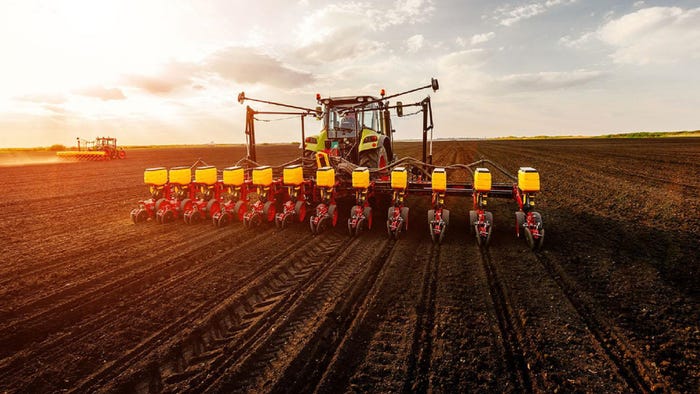
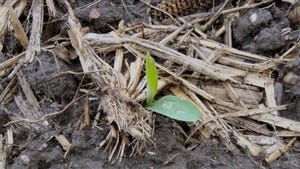
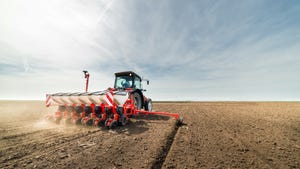
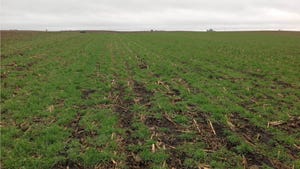
Legvold switched the field’s tillage to his usual strip-till (using the Soil Warrior machine). This reduces his spring field passes from four to one, cuts fertilizer needs and leaves more crop residue to restore soil structure. Fertilizer consumption is reduced because it’s only applied in the strip at planting.

The new tile configuration puts the tile main on the grade, with laterals running on the contour across the field. The previous random tile system ran the laterals straight up the hill.

The new tile main will discharge into a bioreactor – a buried trench filled with wood chips – which typically filters out up to half the nutrients from tile-drained water. Microorganisms living in a thin film on the wood chips denitrify the water’s nitrates into nitrogen gas, releasing it harmlessly into the air.

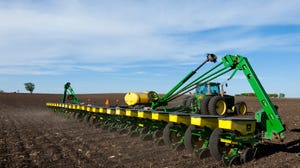
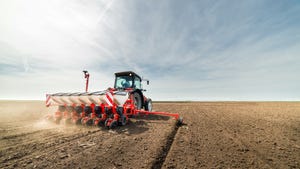
Legvold invested in a Soil Warrior zone-tillage machine with his neighbor, Mike Peterson. It tills and places N, P and K in one pass at a speedy 7.5 to 9 mph. The machine and auto-steer were paid for by a five-year CSP conservation stewardship contract to do high-residue farming.

He raises no-till soybeans and strip-till corn, which “retain a large part of the residue and place the fertilizer in the zone, reducing costs considerably and increasing N efficiency,” Legvold says. “I’ve given up fall nitrogen applications because I can’t stand the 20-30% cost for lost N in some years. Soil Warrior has been a gift to my struggles with pure no-till corn: It tills a 6-in. wide and 8-in. deep ideal seedbed strip and places fertilizer in that zone while retaining residue and moisture between the rows. It builds soil quality through better aggregates and better N cycling since I am not tilling and volatilizing the organic matter through conventional tillage. I use less fuel, preserve the soil and use less fertilizer.”

Mike Peterson, who shares the Soil Warrior with Legvold, agrees that it’s been a good move. “I farm on a thin layer of topsoil that needs a lot of help. We’ve morphed into this system and like it because it reduces our anxiety of jumping into full-blown no-till. Seems like anytime you do something different from the neighboring farms, if it fails, you become the village idiot.

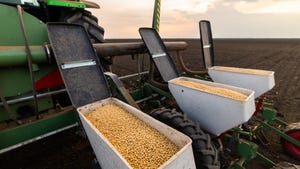
“We’ve parked the ripper, field cultivator and the stalk chopper. We just plant and fertilize in one pass, and sidedress the bulk of our N in early June.”

Dittrich reminds growers: “USDA and the drainage industry have teamed up to develop a smart drainage plan. It’s called CAP-130 (pdf). NRCS provides an attractive incentive to farmers for this smart plan.  However, it begins with a Technical Service Provider, one that is certified through the Ag Drainage Management. Consult ADMC, your local soil and water conservation office, and your tiling contractor for more information.”

Discuss this Article 2

Gene (not verified)
on May 30, 2012

A very good article Susan. Well written with lot of info as I had not heard of that tillage system. It sure make sense on less field work, yet gets land ready to plant.

I will visit their web site as to size of equipment & cost. It may help father & son renters on my farm in Virginia to cut the trips on field work yet keep soil in place when heavy rain come.

Could Corn & Soybean digest do some articles on Virginia farms? We do have farms & acreage that could give a different view as to how we farm versus the Mid West.

Keep up the informative articles as I read them as soon as I get the email.

Gene

Ron (not verified)
on Jun 4, 2012

I need some clarification as in the second to last paragraph they say "We just plant and fertilize in one pass...", but in looking at the specs on the Soil Warrior they do not mention any seed capacity only fertilizer capacity.

Thanks

Post new comment
Sign In or register to use your Corn and Soybean Digest ID
(optional)

Newsletter Signup

Continuing Education Courses
New Course

Accredited for 2 hours/CCA Soil & Water credits. The 2,000 member...

This online CE course details sound mechanical irrigation design and management practices to...
Keeping crop protection chemicals on the crop for which they are intended has been a...
Connect With Us